Skip to content

/Contexts without barriers

Families and schools: where life really happens

This section shows how TAEO breaks down the walls of the traditional clinical consulting room and intervenes where life actually unfolds.

01

Guidance for Parents and/or Caregivers & Home Mediation

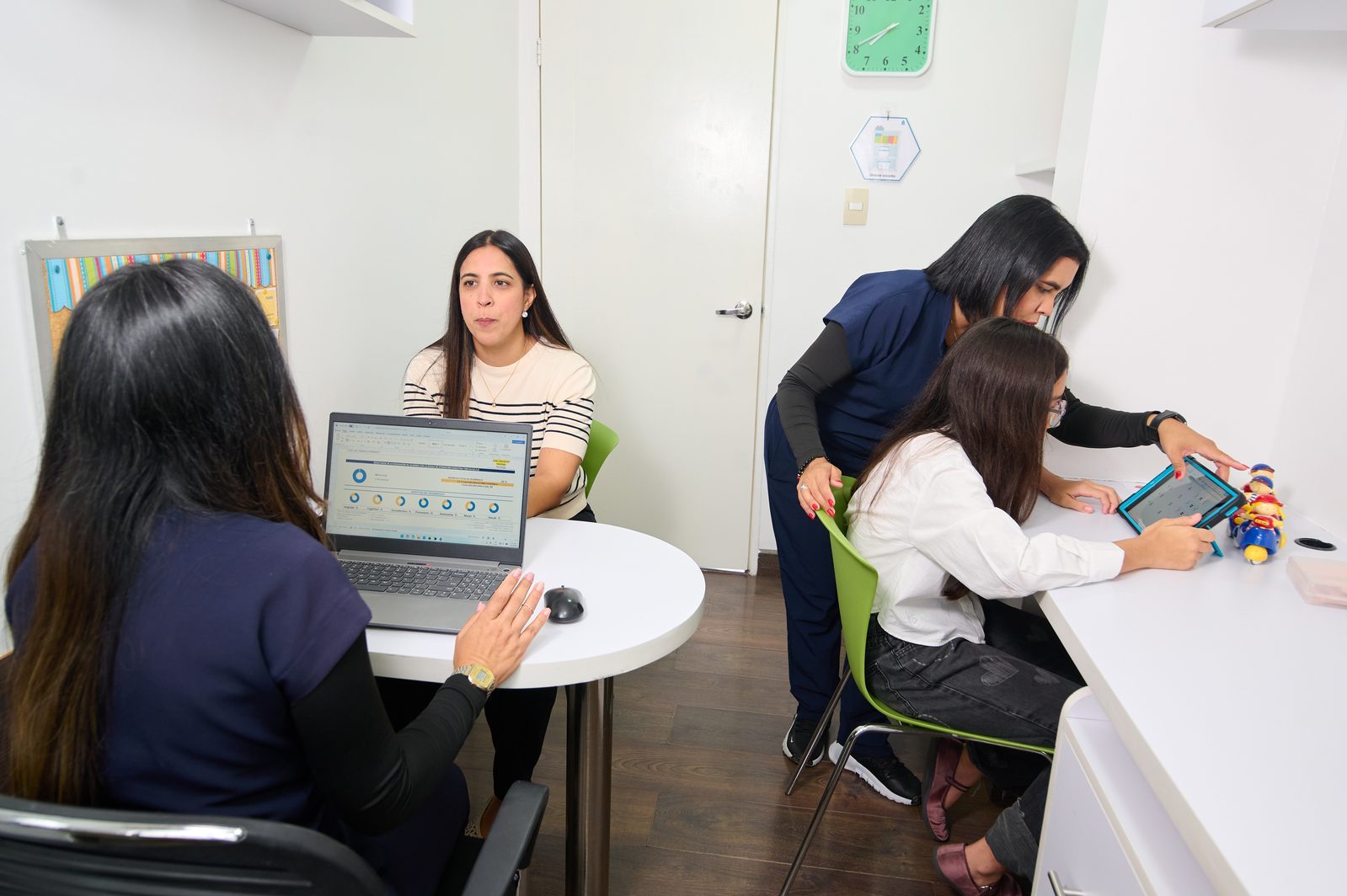
The strongest predictor of developmental success is the quality of mediation a person receives at home. At TAEO we do not treat parents as mere spectators who receive a report disconnected from day-to-day needs; we turn them into the most effective mediators of their children’s neuroplasticity.

Through practical workshops, in-person or online individual or group guidance sessions, and continuous accompaniment, we advise families on:

  • Structuring visual routines and predictability at home.
  • Respectful management of behavioral crises and sensory dysregulation.
  • Functional communication strategies and fostering autonomy in self-care.
  • Caregiver mental health and prevention of parental burnout.

Among many other topics.
02

School Liaison and Inclusion

A psychoeducational intervention that does not dialogue with the school is incomplete. TAEO maintains a formal commitment to educational establishments and to transforming education more broadly:

  • PIE Team and Teacher Advising: we collaborate on drafting and implementing significant and access curricular adaptations (PACI).
  • Classroom Observation: our professionals visit schools to observe real learning dynamics, recess, peer interaction and barriers that block some students’ participation and learning.
  • Talks and Workshops for School Communities: we train teaching and non-teaching staff in neurodiversity and inclusive education—models, concepts and practical experiences that remove stigma and build empathy.
  • Diversiaventuras and PAEI: real inclusion proposals and school accompaniment articulated with the Inclusive School Support Professional (TAEO PAEI).

Who we support at TAEO

We support neurodiversity

Children, adolescents and youth with developmental challenges

Neurodevelopment

  • Autism Spectrum Disorder (ASD) across ages and support levels
  • Attention-Deficit/Hyperactivity Disorder (ADHD), with or without hyperactivity
  • Down syndrome and genetic conditions linked to neurodevelopment
  • Intellectual disability and adaptive functioning challenges

Communication & learning

  • Communication and language disorders (DLD/SLI, pragmatic difficulties)
  • Specific learning difficulties (dyslexia, dyscalculia, dysgraphia)
  • Giftedness / high abilities

Regulation & sensory

  • Eating disorders and sensory food selectivity
  • Behavioral self-regulation and sensory processing challenges

No label required

  • People without a clinical diagnosis facing temporary learning, adaptation or developmental difficulties

Without a clinical diagnosis who need temporary support in some aspect of their development