
Advantages of Picture Books
Many parents, aware of how crucial reading can be for their children's academic future, begin encouraging them from a very young age, even...
Many parents, aware of how decisive reading can be for their children’s academic future, begin encouraging them from a very young age, even before they are enrolled in school or have learned to read and write.
In this regard, they often wonder what the most appropriate books or materials might be to achieve these goals. In this article, we will explore the specific advantages of picture books and define what is meant by the term.
What is a picture book?
In its original Latin meaning, the word album means blank or white. For this reason, some time ago, this term was used for books where family photographs were kept, such as those from travels, weddings, or other events.
This may be an unfamiliar use for newer generations, who rely on electronic devices for image storage; however, older generations remember this practice perfectly.
Now, the term picture book (or libro álbum) does not refer precisely to a collection of blank pages, but rather to a type of literary text in which the image is united with the text and holds great significance, maintaining an interrelationship so that meaning is built from the conjunction of both.
Because of this, since the illustrations tend to be quite evocative, they make it possible to tell a story, even for non-literate individuals. From this, another characteristic of the book can be inferred: they are usually narratives; although this is not exclusive, as they can also be poems.
Thus, it can be said that a picture book goes a step beyond an illustrated book, in which the image plays a secondary role. In fact, in works such as those by Jules Verne, the story can be told without the image, as seen in many editions. This is not the case with a picture book, where, as mentioned, the illustration is the protagonist.
Advantages of picture books
Given their characteristics, they are considered among the most suitable books for promoting reading. Let us look at their advantages below:
- Picture books include many of the great classics of children’s literature;
- Their images stimulate the child’s imagination and fantasy;
- Likewise, the abundance of visual elements fosters the development of observation skills;
- Their design encourages the necessary interaction with the material, allowing the reader to assume an active role in their process;
- Since intentional contradictions between the text and the image can sometimes occur, it fosters the child’s need to develop analytical processes;
- They are an excellent resource for helping to maintain attention over an extended period;
- They foster autonomy regarding the personal process of constructing meaning, as well as the selection of the text the child wishes to read;
- To the extent that a dialogue between image and text is created, the appropriation of the written code is facilitated;
- They develop, even from an early age, a sensitivity toward diverse forms of art, including literature, drawing, and painting;
- Many are made with durable, non-toxic materials in case a young child decides to put them in their mouth.
How to make the most of the advantages of picture books
For children to enjoy all the advantages offered by picture books, of course, it is essential that adults (parents, other family members, and even educators) introduce them to these materials, by purchasing them or making them readily available.
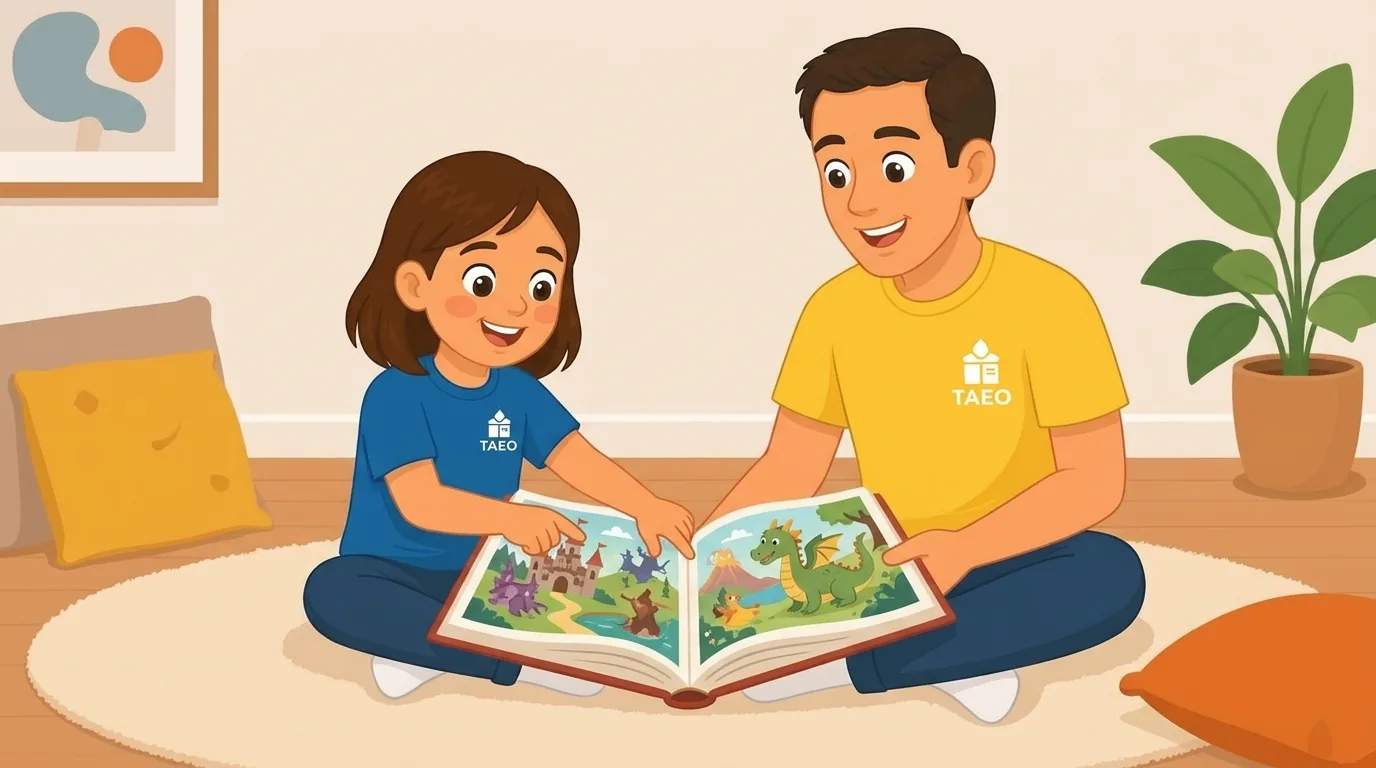
Secondly, it is also wonderful for parents and teachers to read stories together with children, as these shared practices support the learning of reading. In this sense, adults can teach new words and point out illustrations, drawing attention to details the child might not have noticed. The opposite can also happen: the child might spot something the adult overlooked.
Finally, children should be allowed to interact with the text freely, inventing their own stories and changing words if they wish; adults should refrain from intervening to correct them during this process, as this is how little ones construct their own hypotheses about reading and the written code.
What is the best picture book?
For some time now, publishers have recognized that this is a significant market segment, dedicating themselves to publishing many picture books. Every day, more illustrators and writers emerge, creating wonders for children to read.
Consequently, there is a wide diversity of materials, which can make it difficult to decide which one is best for our children. Nevertheless, the recommendation is to visit bookstores with them and let them choose according to their own tastes and interests.
And there is no need to worry about whether the content is appropriate for them, as publishers select and publish these types of texts precisely with the understanding that, along with captivating stories, they offer valuable life lessons.
*CEO of the