
Reconfiguring the Teacher's Role in Distance Education
“…in distance education, the didactic relationship is multifaceted. A plurality of pathways must be used… it is not unidirectional. Fundamentally…
“…in distance education, the didactic relationship is multifaceted. A plurality of pathways must be used… it is not unidirectional. Fundamentally, it is a communication where the student counts on their referential experiences, which make the object of study meaningful; while the advisor must seek the necessary balance for this meaning to emerge” (Ricardo Marín Ibáñez)
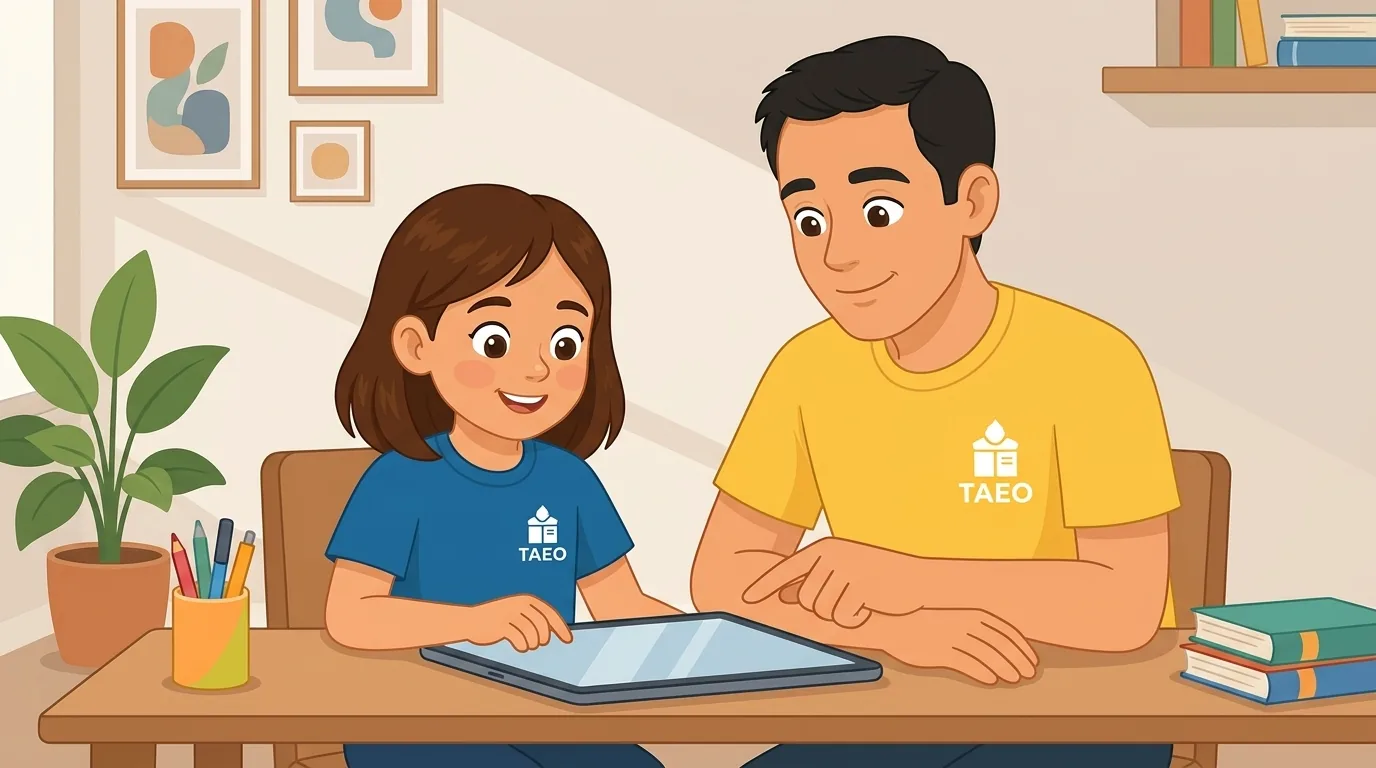
The purpose of this article is to reflect on what education means in times of pandemic. From this current contingency, we have had to rethink not only the actions aimed at providing educational responses to our students’ needs, but even the very conceptions of the teacher’s role: who they are, what they do, what their work is or should be, and how far their responsibilities reach. In a distance education scenario, student-teacher contact is reduced and, likewise, the figure of the parent-mediator takes on greater significance in educational interaction.
The most critical aspect of this circumstance is that, while some of us were already adapting the idea of education to a model with a greater presence of new technologies, not all the changes and adaptations had been made. There were unmet needs in terms of equipment provision, training, or professional development; but none of that mattered. The pandemic hit, and we had to adapt out of necessity. It was like changing an airplane’s engines mid-flight.
Consequently, we had to respond immediately and in diverse ways to the contingency: each person with what they had and as best they could. Gradually, responses in this regard have adaptively improved in terms of relevance and the effectiveness of educational actions. Later, it will be time to review what is still needed to fully make the leap to completely distance education, offline or online. That will be the subject of another article.
For now, we can pause to consider how this momentous shift has reconfigured parts of the teacher’s role. Nevertheless, despite what might once have been thought, the educator’s support and presence remain unavoidable and essential. It is important to be clear about this as our starting point.
In this sense, it is essential that we continue to identify ourselves as decisive key players—not only in achieving the goals pursued by the school individually for each student, but even beyond that, in relation to quality education and fulfilling the global goals of the 2030 Agenda set out in the Incheon Declaration and the Sustainable Development Goals, better known as the SDGs, as we discussed in a previous article.
It is within this context, keeping in mind the goal of inclusive, quality education, that we wish to frame this reflection. In the current circumstances, there is simply no way to maintain a homogenizing education when the spaces where the educational act takes place are completely different, even among students in the same class.
In the current landscape, where the educational setting is the home, each household constitutes a unique system differing from the others, with diverse actors and possibilities. And that is something the teacher must consider first and foremost: it is no longer just about understanding the diversity of our students, but the diversity of our students’ homes.
Therefore, the teacher-parent relationship must become even closer, with parents acting as mediators of the process. Likewise, unequal access to technology and parents’ varying levels of training in using it must also be taken into account by teachers when providing remote support.
In this way, teacher support is not just for the student, but for the entire family, which now functions as the new educational cell—what the classroom used to be. This new learning space is also distinct because its members are related yet have vastly different ages and interests that are often harder to reconcile. In short, diversity is also present within the home.
On the other hand, a student at home working through assigned school activities needs, today more than ever, to be an expert learner: capable of self-managing their learning processes, maintaining persistence and motivation, and self-assessing their performance. They need to be organized and structured to manage the time they spend on their tasks, motivated to complete them, and possess solid reading, writing, and communication skills in general, as they need to comprehend and produce oral, written, and audiovisual texts.
This means that alongside developing competencies across academic subject areas, students must also develop, far more than before, competencies related to learning how to learn. And in equal measure, as we have been noting, this requires a necessary, broad, and deep understanding and acknowledgment that each student, as a unique individual, is diverse and immersed in a specific context with mediators whose capacities and availability also differ from one student to another.
This brings to mind Principle III of UDL (Universal Design for Learning): provide multiple means of engagement. Without motivation, there is no action. This has always been known. But here again, we must consider individual differences: “students differ markedly in the ways in which they can be engaged or motivated to learn” (Alba, Sánchez, Sánchez & Zubillaga, 2013).
Yet not everyone has the same motivation or the same level of commitment—neither before, in person, nor now, in distance mode. Just as in school, some students need more external motivation; others, on the contrary, work better when given greater autonomy. Many find satisfaction in their own effort or achievement. Some require something more. Some students are drawn to novel, non-routine tasks, while others find them intimidating. There are those who prefer to work alone and those who thrive in teams.
Therefore, it is essential to provide multiple means of engagement to capture interest, sustain the student’s effort and persistence during activities, and enable them to self-regulate and redirect their processes when needed. By implementing diverse mediation strategies for motivational processes, or by offering varied forms of motivation during learning activities, student engagement is achieved through healthy emotional management, while fostering the creative potential that exists in each person.
However, traditional schooling seems to have prioritized a dynamic where the only aspiration is a grade or promotion to the next grade level, forgetting the multiple factors that influence a person’s affective inclination toward an action: cultural aspects, personal interest, prior knowledge, and experiences, among many others. It should be clarified that when we mention all this, we must also recognize that it applies to the family unit, not just to the student, because parents, as mediators, must motivate, but they also need to be motivated in order to remain enthusiastic in their role.
In summary, reconfiguring the teacher’s role in distance education within the context of COVID-19 lockdown calls for considering the following aspects:
– Investing in the family as co-mediators of the process. This has always been important; but today it is indispensable, considering that during this contingency, parents and caregivers not only spend more hours with their children than when they attended school and parents went to work, but additionally, their participation in everything concerning 2020 schooling is significantly greater—almost total in most cases.
– Organizing space and time is essential: supporting the family in selecting the most suitable area to carry out school activities, regardless of the home’s physical characteristics, means optimizing resources based on actual conditions.
– Likewise, students must be supported in organizing their time to complete assignments, alternating subjects, content, and activities according to their tastes, interests, needs, and actual possibilities. This prevents them from becoming overwhelmed or exhausted.
– Strategically organizing educational materials plays a major role in face-to-face settings, and even more so in distance education; in this regard, the first step is designing materials based on understanding the group and the specific characteristics of our students.
– Next, alternating tasks by difficulty level and effort involved. Breaking activities down within a single assignment helps foster focus and persistence during execution. Finally, introducing variety while maintaining a coherent structure by subject.
Even before the current scenarios brought about by COVID-19—and no less necessary today—we must always consider the importance of giving meaning to the educational act, understanding that what is learned must serve life, so that students see the real-world purpose of learning what we propose as educators. This is paramount; it cannot be overlooked, and teachers must remember it every day when designing an activity or interacting with students and parents.
In several wide-reaching documents of universal importance, such as the Dakar Framework for Action (2000), there is mention of “an education aimed at tapping each person’s talents and potential, and developing learners’ personalities, so that they can improve their lives and transform their societies.” In this context, the word ‘tapping’ should not be understood as mere exploitation, but rather that these talents must emerge, break through, and erupt from within.
And this is also something we must consider when developing—and even planning—activities within distance education. Let us recall what the aforementioned Universal Design for Learning proposes in Principle II: multiple means of expression. Everyone has a talent; everyone can express themselves in the way that suits them best. Giving a student the opportunity to create a song instead of a written essay—isn’t that the best way for them to showcase their talents and abilities?
This is a unique opportunity we are experiencing. But it must be lived and developed collaboratively, alongside parents at home, like never before. Resources can be maximized to the extent that we foster and achieve the full participation of all stakeholders: parents, teachers, and students.
Our aspiration is that, together, we can transform this historical moment into a memorable time—one that, despite the hardships, is marked not by uncertainty and fear, but by learning, growth, and hope. Through strengthening everyone’s educational leadership, may this period serve as a time of transformation and preparation for what comes after: for a tomorrow we eagerly await, but one we also anticipate by working and preparing.
And what do we envision afterward… beyond the pandemic? The school’s doors—and, of course, open arms—will welcome everyone back, and we will return ever-motivated to keep innovating. It is our duty to consolidate quality education, understood as that which transcends the school because it prepares us for life. There is life beyond this contingency, and we are moving toward it, with our hope anchored in what we build together from the school, hand in hand, across diverse spaces. And the best we can do, for now, is wisely seize this opportunity.
*CEO of Organización Psicoeducativa TAEO