
Practices That Support Learning to Read
It is often said that a reading-rich environment fosters children's reading development. However, it is also essential to implement actions and practices that enhance...
It is often said that a reading-friendly environment fosters children’s learning to read. Now, it is also necessary to consider implementing actions and practices that nurture a positive attitude toward the written word, extending even beyond strictly academic purposes. Let us look at a few examples.
At home
When it comes to reading, responsibility does not rest solely with the school. Rather, as the primary space for socialization, the family environment can either encourage this learning or, on the contrary, discourage it.
With this in mind, here are some helpful practices to support learning to read at home:
- Reading corner: it is widely recognized that a space where written texts are physically present fosters opportunities for interacting with them. Therefore, it is beneficial to arrange a small bookshelf with titles suited to the child’s age and developmental stage, comfortable seating, and an inviting atmosphere.
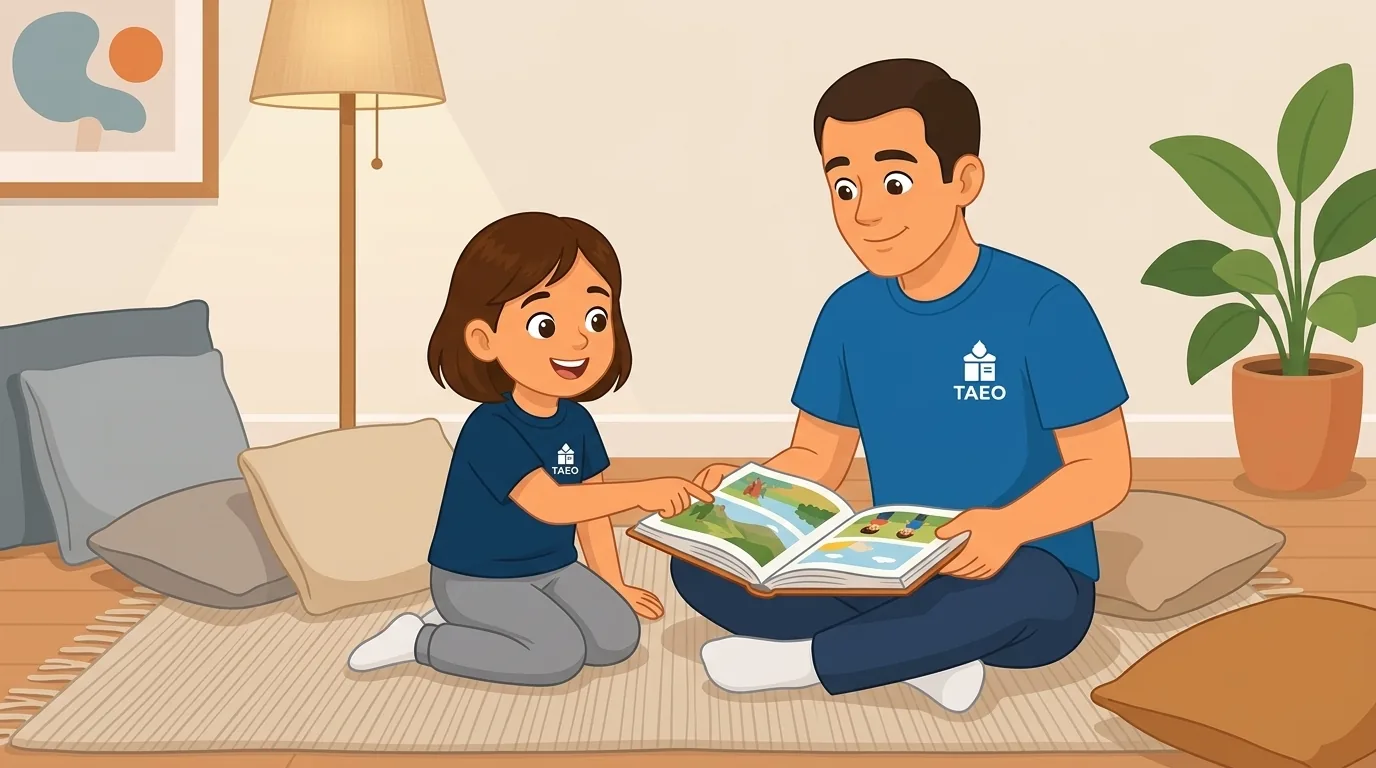
- A reading family: when adults read regularly, they serve as role models for little ones. Families can gather in a shared space in the evenings, with each person enjoying their own book.
- Shared reading: you can discuss and share thoughts on what each person is reading; you can also encourage reading aloud together—such as a story or fable—or read a bedtime story to your child.
- Functional use of diverse texts: children who already have some knowledge of written language can help write the grocery list; following written instructions to assemble toys is also beneficial; likewise, you can make use of reminder notes, for example, on the refrigerator.
- Letter-based toys: alphabet blocks work wonderfully for younger children, while word puzzles, crosswords, Scrabble, and similar games are great for older ones.
At school
Several of these home-based practices can also be implemented at school. In addition, there are other creative strategies, such as:
- Karaoke: karaoke is an excellent tool for helping children learn to read, as highlighted in various research studies; naturally, songs should be selected according to their musical tastes. Afterward, children can be given the printed lyrics to read and learn.
- Subtitled movies: watching films in other languages with subtitles supports not only reading development, but also familiarity with a foreign language. Of course, content should always be age-appropriate. These do not necessarily have to be fictional stories; documentaries about wildlife, recycling, and other engaging topics are also wonderful choices.
- Bulletin boards: it is valuable to have a small bulletin board both in the classroom and in hallways for interesting facts, poems, or short stories. It is best to avoid overly long passages, opting instead for brief texts with large print. The board should be placed at children’s eye level and feature attractive visuals. Of course, the materials should be refreshed regularly.
- Labels and signs: toy bins, furniture, supplies, and tools… everything can carry a label with its name. This encourages daily interaction with written code.
And just like these, there are many more… It is worth emphasizing that all the practices mentioned above support the journey of learning to read, even for pre-literate children or those who have not yet entered formal schooling.
CEO of the Psychoeducational Organization TAEO