
Why and How We Should Be Learning Mediators for Our Children
Parenting is a complex endeavor that goes far beyond providing food or shelter. In this sense, we must also be learning mediators for our children, even though…
Dr. Mayluc Martínez
Parenting is a complex endeavor that goes far beyond providing food or shelter. In this sense, we must also be learning mediators for our children, even though we are not always prepared for it. To this end, in this article we will explore several recommendations, tips, and suggestions.
What Learning Mediation Means
While certain skills can naturally be consolidated, mediation may be necessary to make learning more effective or more enriching, especially when children encounter barriers in their interaction with the environment.
In other words, to be more explicit, situations may sometimes arise that hinder the construction of such learning. Among these, we can highlight:
– Learning material or content that is entirely new to the child; this often happens, for instance, when facing a foreign language that is completely different from one’s native tongue.
– Prior or prerequisite skills necessary for this construction are not yet fully developed; for example, the child needs to cut and paste pictures into an album, but still struggles with handling scissors.
– The child has received instructions on what to do, but they were not clear; it could happen, for example, that a verbal explanation was given on how to fold a shirt; in that case, behavioral modeling or chaining would be required.
Typically, an adult mediator is someone who knows how to support the construction process, as they understand the content to be learned and possess the necessary competencies to act as a facilitator of that process, helping the child overcome any barriers that may arise.
Thus, learning mediation can be defined as a conscious, intentional, and systematic pedagogical-dialogical interaction process designed to generate meaningful, self-managed learning experiences.
Why We Should Be Learning Mediators for Our Children
Education is an ongoing process that can take place anywhere and at any time. Thus, children do not only learn something new when they are at school, but also at home or on the street.
In this way, the need to intervene or provide support may also arise at home, with parents serving as mediators, whether concerning academic content or an essential life skill.
From a certain perspective, parents should be the best mediators in their children’s learning, given that they know them deeply and understand the dynamic of their own home.
How to Be Learning Mediators for Our Children
To be effective learning mediators for our children, we must begin by gaining a clear understanding of the elements involved in this process: the child or young person, the environment, how to provide support, and the potential barriers that may emerge.
Skills and Styles
Regarding the learner—who in this case is our child—we must first be aware of the expected developmental milestones and skills for their age. This means that as facilitators, we should not force a situation if there is not yet sufficient maturity. For example, we cannot demand or expect a three-year-old child to read fluently.
Secondly, we must also understand how they learn best or how they prefer to receive information, so that we can present supports appropriately. In this sense, it is essential to determine whether it is easier for them to grasp a concept through an example, a verbal explanation, or even a video.
The Environment
Regarding the environment, which in this case is the home, certain considerations must also be kept in mind. For instance, it is important to organize things so that there is a dedicated time and space for learning or studying, free from various types of interference—understood as distractions, such as a television left on.
Supports
The supports you can offer as learning mediators for your children can be diverse. For example, in certain cases, the use of visual supports may be required, such as visual schedules, among other resources.
In addition, we can intervene when necessary by supporting through modeling or setting an example, using strategies such as behavioral chaining, among others.
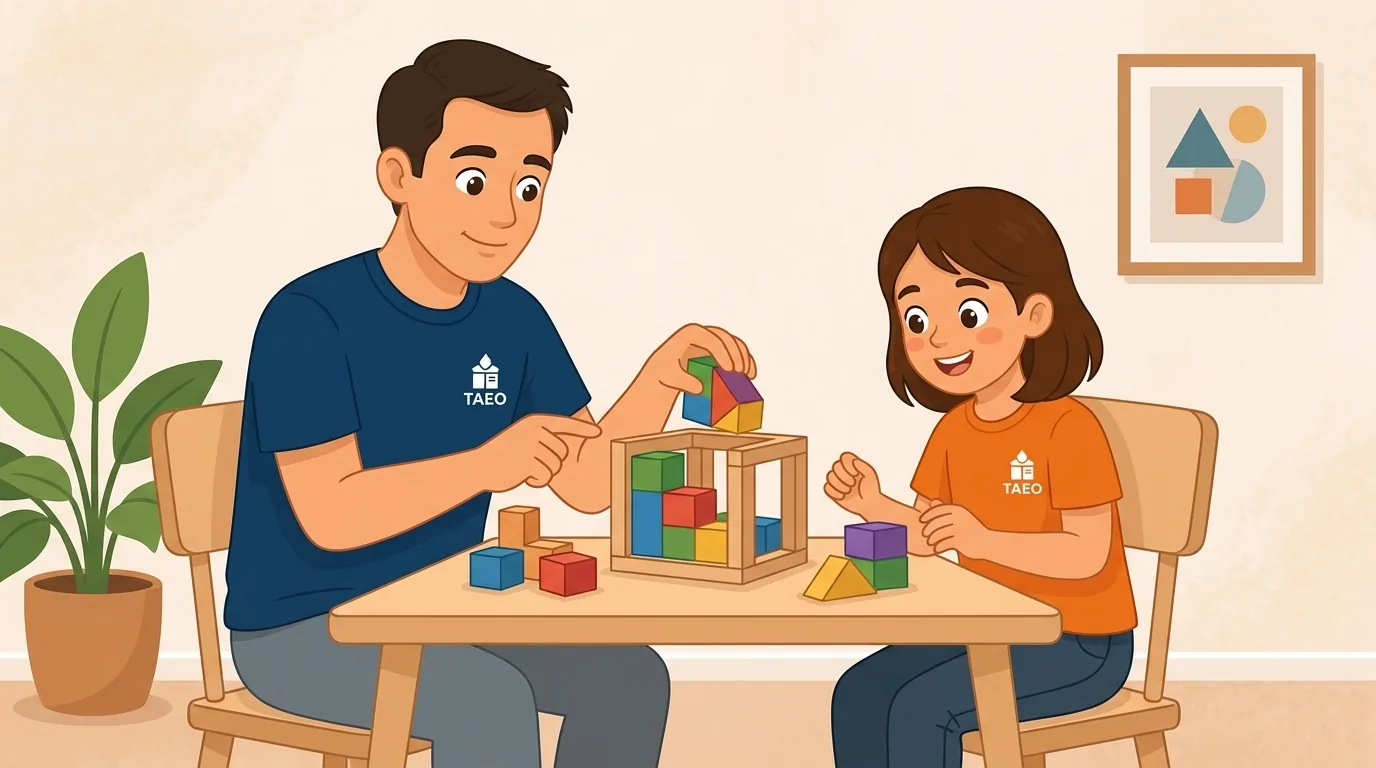
A crucial aspect to keep in mind is that parents can and should play with their children and share free time with them, as these moments also provide opportunities to consolidate learning, such as social skills.
Barriers
Last but not least, it is necessary to evaluate the space within the home in order to identify potential barriers that could hinder the normal development of learning. An example might be the lack of resources such as educational games or books suited to the child’s age and interests, among others.
Continuous Learning One particular feature of learning is that it can occur anywhere and at any moment. Therefore, as parents, we must remain attentive to the opportunity to intervene constructively, supporting our children along their journey. We cannot step away from being their parents, nor from serving, when needed, as learning mediators for our children.
CEO of the Psychoeducational Organization TAEO