
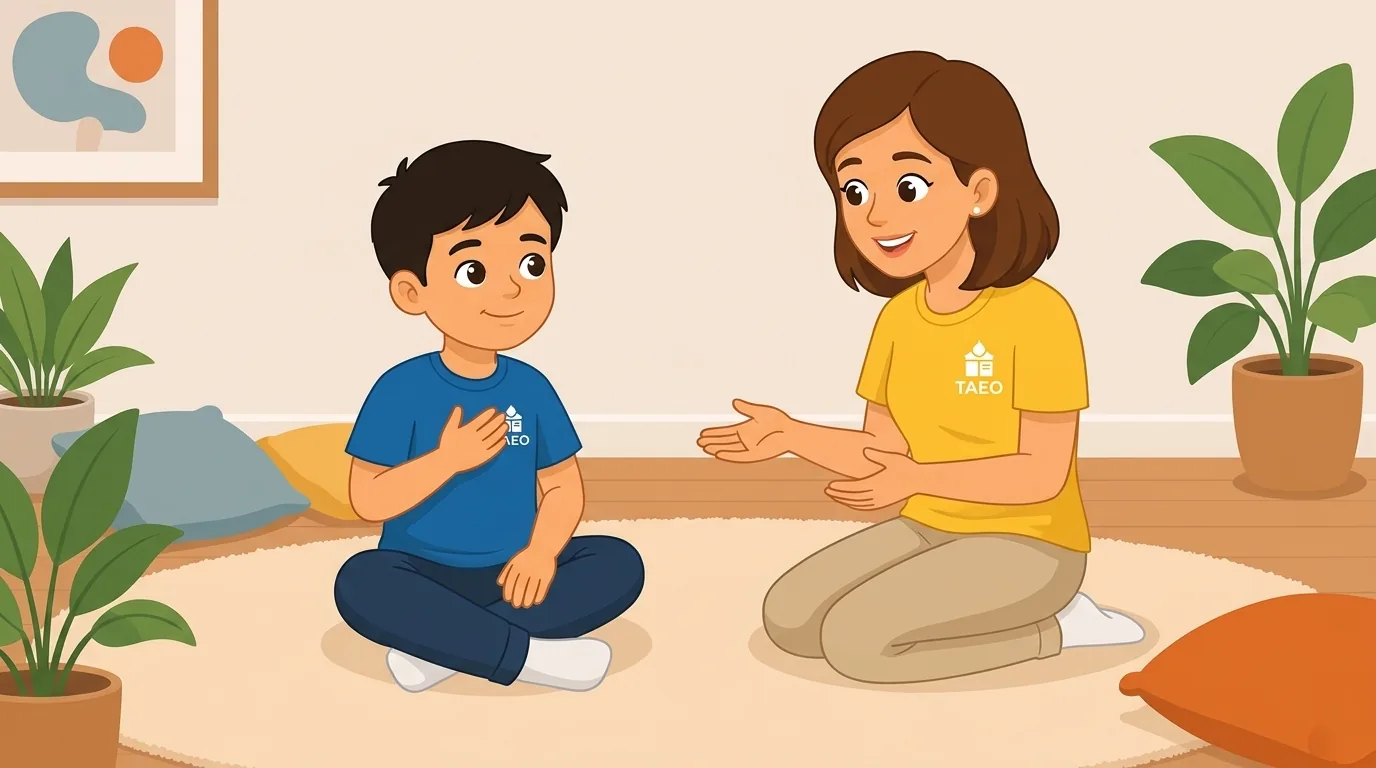
Managing Problematic or Challenging Behaviors at Home
Problematic or challenging behaviors exhibited by children and youth at home can have a negative impact on other family members, creating disharmony…
Problematic or challenging behaviors exhibited by children and youth at home can have a negative impact on other family members, creating disharmony and sometimes disrupting daily routines and activities.
Faced with these situations, parents and other adults living under the same roof know they need to respond in some way to prevent these unwanted behaviors from persisting or even escalating.
However, they are not always sure what the best response is, especially when problematic or challenging behavior at home is frequent and seems to worsen when threatened with certain reactions.
For this reason, we share some guidance below to help understand what these behaviors mean and how to address them, fostering better relationships among family members.
Problematic or Challenging Behaviors at Home
Problematic or challenging behaviors at home encompass a range of actions that can manifest in various ways, such as:
- Outbursts of anger
- Yelling or screaming
- Non-compliance or breaking of rules
- Oppositional behavior
- Motor restlessness or hyperactivity
- Uncontrolled emotional reactions
- Excessive inhibition or withdrawal
- Task avoidance
- Repetitive rituals
These behaviors can stem from a variety of origins, related to the home environment itself, personal situations affecting the child or adolescent, or conditions such as ADHD, ASD, OCD, among others.
In such cases, these behaviors affect relationships with other family members and disrupt daily routines, as others may need, for example, a quiet space to do homework or rest.
How to Manage Problematic or Challenging Behaviors at Home
Here are some recommendations to help understand what might be triggering the problematic behavior and how to act in specific situations, helping to improve the parent-child relationship.
FIRST STEP: IDENTIFYING BEHAVIORS
To manage these problematic or challenging behaviors at home, it is essential to proceed objectively. Therefore, the first step is to identify the specific behaviors; however, it is important to emphasize that we must avoid labels or name-calling. In this regard, instead of saying a young person is “antisocial,” specify what they actually do—for instance, locking themselves in their room whenever there is a family gathering.
Likewise, we must consider the context in which the behavior occurs; a child may be labeled “restless” because they are always running. But running inside the house, knowing there is a rule against it, is very different from running at the park or on a sports court.
SECOND STEP: ANALYZING BEHAVIORS
Once behaviors and the circumstances in which they take place are identified, they must also be analyzed to understand the antecedents (what happens right before) and consequences (what happens right after), as the latter might even be acting as a behavior reinforcer.
For example, if a child is playing and the mother tells them it is bedtime (antecedent), but the child screams and throws a tantrum (problematic behavior), and the mother then allows them to stay up a bit longer (consequence), the behavior will likely persist because it served its purpose: getting what they wanted, which was more playtime.
THIRD STEP: MANAGING BEHAVIORS
To prevent or reduce problematic or challenging behaviors at home, we can intervene both at the antecedent level and the consequence level. In the example above, the mother could give a reminder 15 minutes before that playtime is about to end; if the child screams and cries when the time is up, she should not give in and grant more playtime.
Instead, she can grant extra playtime at another moment when the child engages in a behavior she wants to encourage (such as brushing their teeth or taking a bath). Other recommendations to keep in mind include:
- Do not give in to tantrums: resist the temptation and stay firm so as not to reinforce the behavior;
- Do not respond harshly, whether by raising your voice or, worse, through threats and punishments;
- It is best to try ignoring the unwanted behavior to promote its extinction, provided it is maintained by attention;
- Instead, reinforce the desired behavior;
- And if you plan to talk with the child or youth, wait until the emotional storm has passed and they are calm.
When to Seek Professional Support
If, despite these efforts, problematic or challenging behaviors at home persist, crying spells intensify, or violent behaviors begin to emerge, the most advisable step is to consult a psychoeducational specialist or an experienced psychologist for a comprehensive evaluation, aimed at designing an intervention that is truly holistic.
*CEO of the