
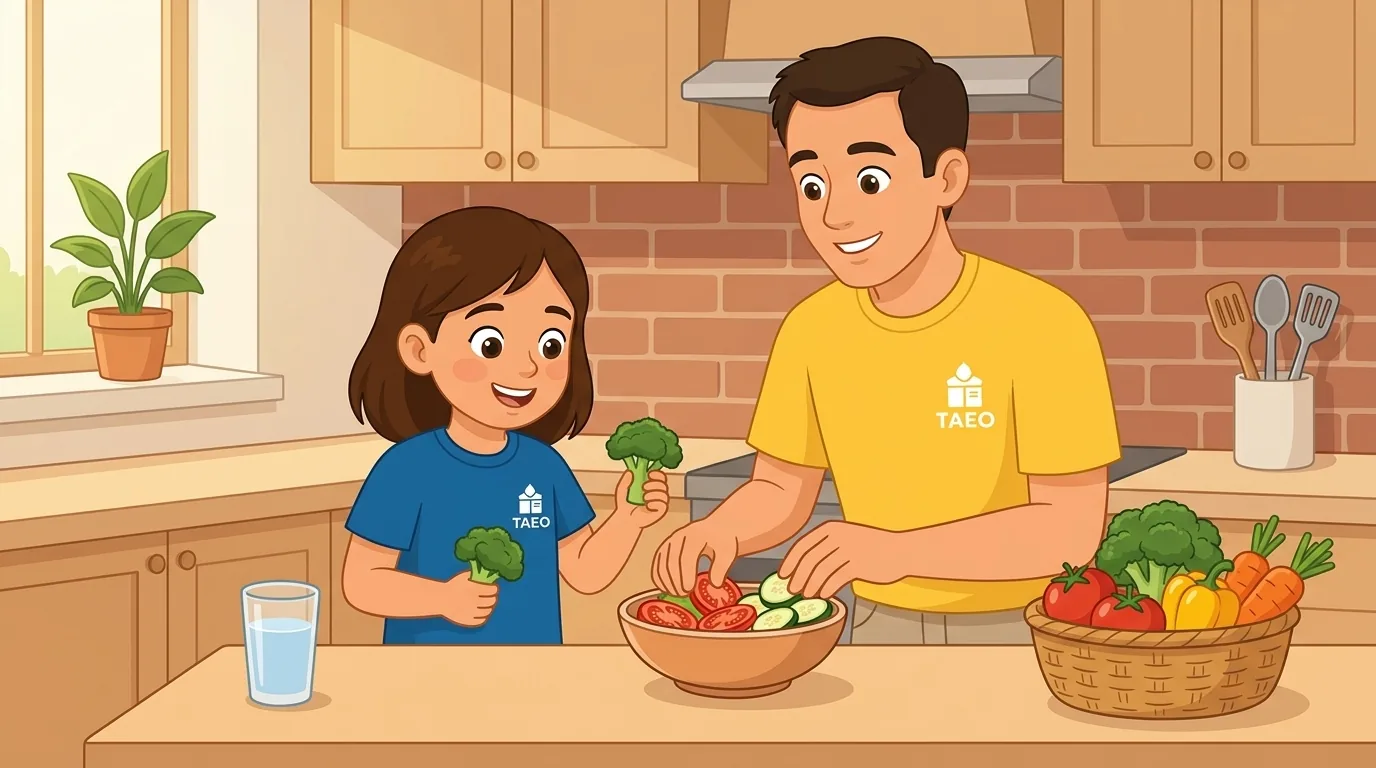
How to Help Your Child Eat Vegetables
Eating vegetables and fruits is essential for our bodies, as they are a rich source of dietary fiber as well as a wide variety of nutrients, including vitamins...
Eating vegetables and fruits is essential for our bodies, as they are a source of dietary fiber, as well as a wide variety of nutrients, including vitamins and minerals. In fact, the Spanish Society of Community Nutrition (SENC) recommends consuming around five 150-gram servings per day.
However, children often reject vegetables because they do not like their taste, or because they dislike their appearance or smell. This includes foods such as: broccoli, lettuce, spinach, onions; and even fruits like tomatoes and eggplant, among others. Below, we explore how to help children eat their vegetables. Take note of these simple tips.
Leading by Example
If we ask children to eat vegetables because they are good for them, we should eat them too. Therefore, it is not ideal to serve them pumpkin purée while we eat steak and French fries right in front of them. Placing a fresh salad bowl on the table, serving ourselves and them, and enjoying it together is a wonderful way to foster healthy eating habits as a family.
Inviting Them to Choose the Food
Interacting with the foods they usually reject can begin the moment we are at the grocery store: shopping for vegetables together and inviting them to pick the ones they think look best.
This helps them view vegetables as a natural part of their diet. In fact, according to a study, allowing children to choose these foods increases the likelihood of consumption by up to 80%.
Involving Them in Preparation
Once in the kitchen, if children see how the food is prepared, if they handle it and become familiar with its smell and appearance, they are likely to be much less hesitant to eat it.
Tasting Step by Step
If a child does not want to eat lettuce, we make a mistake by serving them a full bowl of salad filled with it and other vegetables. Instead, what we should do is offer a small taste on their plate—or even a bite while they keep us company while cooking. Later, we can gradually increase the portion size.
Changing the Presentation
They might not enjoy raw cucumber or celery on a plate. Instead, we can turn them into a beverage: we can make a smoothie with these vegetables, adding a splash of lemon and some ice to make it more refreshing.
Another option is preparing purées or blended soups so they can enjoy the vegetables they might reject based on appearance alone. For example, if they dislike whole lettuce leaves, we can shred them very finely.
Eating with the Eyes and Imagination
We can even go a step further and play with the presentation of the dish, placing peas as eyes on a tomato slice to create a face, with small broccoli florets resembling hair. If they find it fun, they may be far more receptive to trying it.
Finding Alternatives
If the rejection is directed at a specific vegetable, we can look for one with equivalent nutrients. For instance, instead of lettuce, we can try spinach, Swiss chard, artichokes, or escarole.
Without Forcing, but Without Giving Up
What we must never do is force them, threaten punishments, or use bribes, as this only triggers greater resistance. We can, however, offer positive reinforcement when the desired behavior occurs (in this case, eating the vegetables served on their plate).
And even if they refuse one day, we will keep trying the next—changing the vegetables, the presentation, or the cooking method, as mentioned above. We must not give up, as it is fundamentally a matter of health, and these foods are essential for a balanced diet.
When to Consult a Specialist
If, after trying all these approaches, the child still refuses to taste the food, or experiences nausea and even vomits after eating it, it is advisable to consult a specialist to determine whether an avoidant/restrictive food intake disorder or a food allergy is the underlying cause.
CEO of the TAEO Psychoeducational Organization