
What Does an Inclusive School Look Like?
Let's imagine that today we are visiting a fully inclusive school. The first thing we notice upon arriving is that there are welcome signs for visitors, as well as warm greetings for...
Let’s imagine that today we are visiting a fully inclusive school. The first thing we notice upon arriving is that there are signs welcoming visitors, as well as greeting everyone who is already part of the educational community.
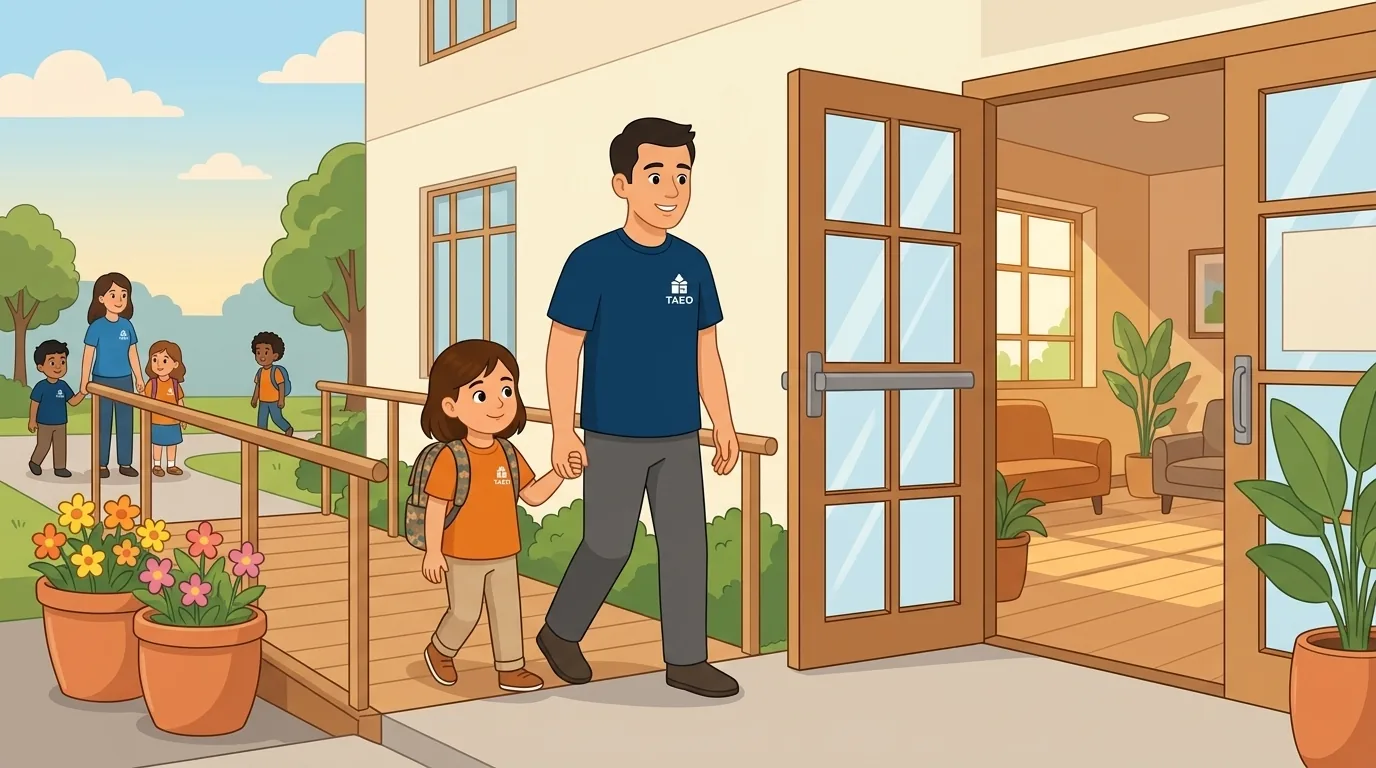
Once inside, or even before entering, we see ramps that provide access for people with reduced mobility. In every case, these ramps are wide enough for wheelchair passage, complete with handrails along the sides for support. There is also clear signage on classroom doors, restrooms, and offices, written using the Braille system.
In the hallways and common areas, parents, students, teachers, administrators, and other members of the educational team exchange warm greetings and affectionate words. These gestures extend to visitors, who can wait to be attended to in a comfortable area, located near where the teachers also have their lounge.
We observe that there is great diversity among both students and educators, both in their physical appearance and behaviors; some show visible signs of belonging to a specific religious group, while others do not.
Furthermore, this diversity is reflected in the artwork and images displayed along the hallways. Additionally, on the bulletin boards near the main office, there is information regarding the institution’s policies to foster positive coexistence.
Just today, a group of parents has come to help organize a fair showcasing different cultures. Several community members who are not part of the school have been invited to participate, traveling from other regions across the country.
In one classroom, students are organized into small groups of 4 to 6 peers. One student is helping another child finish an assignment. There is also a support professional working alongside the lead teacher. Various shelves display diverse materials: educational games, building and construction sets, books (some in Braille), as well as audiovisual equipment.
Recess time arrives. The students head out to the playground. Everyone participates in shared games, guided in some instances by a support professional. A teacher sings while translating into sign language for a group. There is no sign of excluded children, and certainly no attitudes or behaviors indicative of school bullying. Although one of the parents who came to help out today is gently talking with two children who were disputing over a ball.
Meanwhile, in the staff room, the coordinator is assisting teachers with multi-level instructional planning. Others are reviewing evaluation questionnaires that will be administered to identify any potential barriers to inclusion and participation within the school.
In a multipurpose room, one group of students is engaged in arts and crafts, while on the other side, a music teacher works with various percussion instruments, which the children play and explore to discover their unique sounds.
Before concluding class in another room, the teacher invites students to share what they learned today and how they felt. Most participate eagerly. However, one little girl says nothing; instead, she hands the teacher a drawing of a person making a heart sign with their hands.
We know that, beyond the aspects highlighted in this short article, many other elements must be present for an institution to be considered truly inclusive. Likewise, we recognize that the standards for earning such a distinction are not achieved once and for all; rather, they require continuous, dedicated work.
Yet it is equally true that there are fundamental elements that should always be present in educational institutions, such as those we witnessed today during our imaginary visit to a dream school—one that we long for and strive to build, here and everywhere across the world.
CEO of the TAEO Psychoeducational Organization