
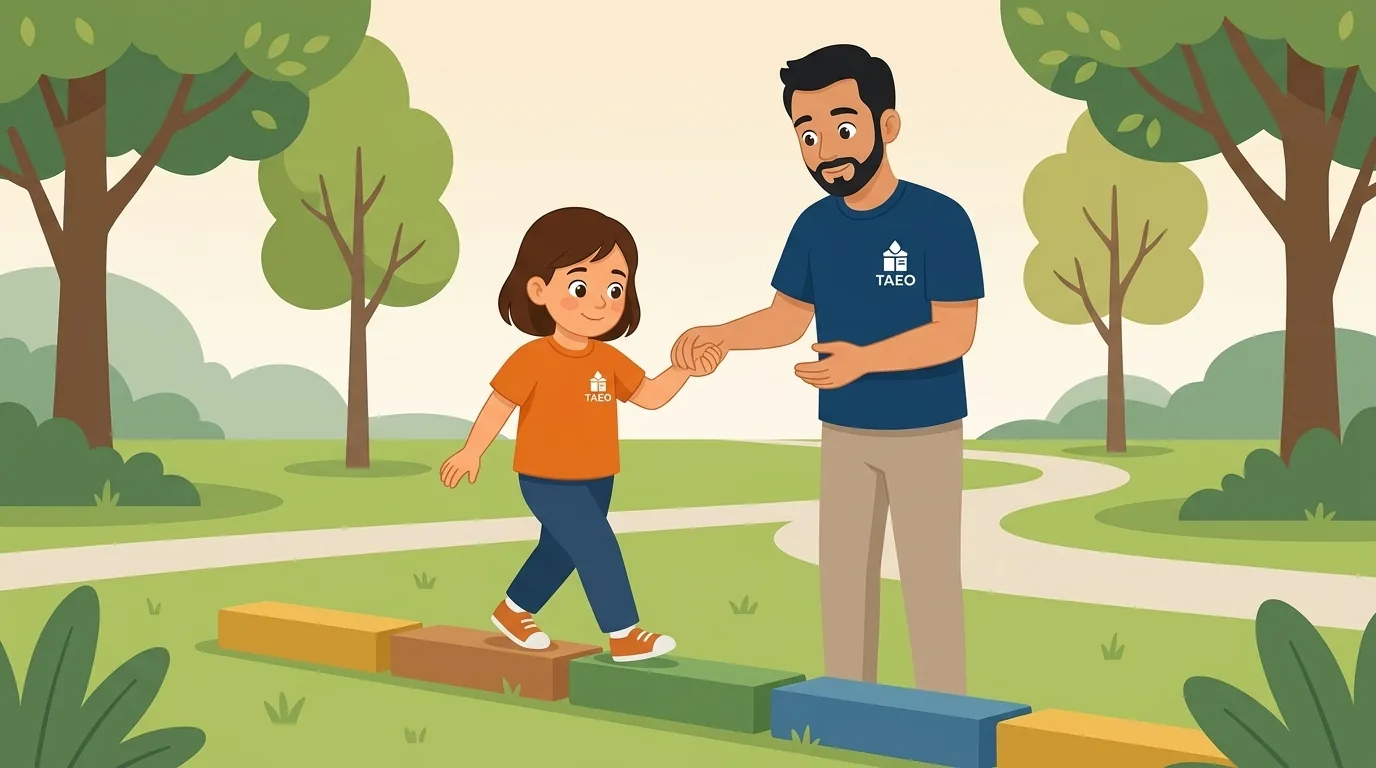
Physical Activity in Children with Developmental Coordination Disorder
Engaging in physical activity for children with developmental coordination disorder can be a complex situation. On one hand, they need to exercise to…
Engaging in physical activity for children with developmental coordination disorder can be a complex situation. On one hand, they need to exercise to maintain good health and improve their various motor skills; on the other hand, there are ongoing challenges—and even risks—that must be taken into account. Let us look at all of this in more detail.
Developmental Coordination Disorder
As we have explained in previous posts, developmental coordination disorder is not caused by an injury, neurological condition, or musculoskeletal disease, although it can be secondary to cerebral palsy.
Its manifestations include:
- Delays in reaching motor milestones,
- Difficulties developing gross and fine motor skills,
- Movements and execution that tend to be slow and imprecise,
- A hesitant and clumsy gait,
- Difficulty with coordinated movements in sports or daily activities.
The Need for Physical Activity
All of us need to engage in some form of physical activity for our overall health and well-being. And for individuals with developmental coordination disorder, this need is even more urgent.
However, according to research endorsed by the Spanish Association of Pediatrics, “it is common for children with this diagnosis to avoid participating in physical activities” due to disinterest, apathy, fear, or insecurity.
This can lead to various psychological consequences (for example, a tendency toward isolation) and the exacerbation of associated mental health concerns, such as depression and anxiety.
Likewise, the researchers behind the study point out that a sedentary lifestyle resulting from a lack of physical activity leads to overweight and obesity, which in turn carries the risk of cardiovascular and musculoskeletal diseases.
What Type of Physical Activity Can They Do?
For the reasons outlined above, it is essential to encourage children and adolescents with developmental coordination disorder to engage in physical activity under the conditions best suited to them.
In this regard, practicing sports with repetitive movements and relatively simpler execution is recommended, such as swimming or cycling—though it may be necessary to practice them in controlled environments, such as swimming pools or stationary bicycles, respectively.
According to research, other sports that may also be suitable include soccer, unlike those requiring higher motor coordination or hand-eye / body-eye coordination, such as baseball and tennis. However, these should not be completely ruled out once children achieve greater efficiency in movement control.
Furthermore, alternatives such as martial arts, yoga, and dance can be explored; dance incorporates music and playfulness, which can be especially appealing to young children.
Of course, it is essential not to discontinue therapies and to follow through with the work recommended by specialists (physical therapist and/or kinesiologist), according to the individual assessment carried out in each case.
Benefits of Physical Activity
Engaging in physical activity can offer children with developmental coordination disorder a wide range of physical and motor benefits, including the following:
- Improves sensory organization
- Increases balance skills
- Facilitates the development of diverse motor skills
- Increases strength and endurance
- Enhances limb coordination
- Helps develop proprioception
Finally, because it stimulates them and helps them feel relaxed, physical activity also benefits them psychologically by boosting mood, self-acceptance, and self-esteem as they see their performance improve.
*CEO of the