
Suitable Books to Foster Reading
Discussing which books are best suited to foster reading is tricky ground, as it might imply that some are unsuitable, which is not necessarily true...
Discussing which books are best suited to foster reading is tricky ground, as it might imply that some are unsuitable, which is not necessarily true.
In fact, once children begin to discover that there is a world hidden in written words, they become curious about what all the texts around them say, from billboards to the labels on their toy boxes.
Nevertheless, there are several considerations we can keep in mind, related to age, familiarity with reading, and other factors. Here are a few brief suggestions when choosing materials to promote reading among young children.
Illustration and Color
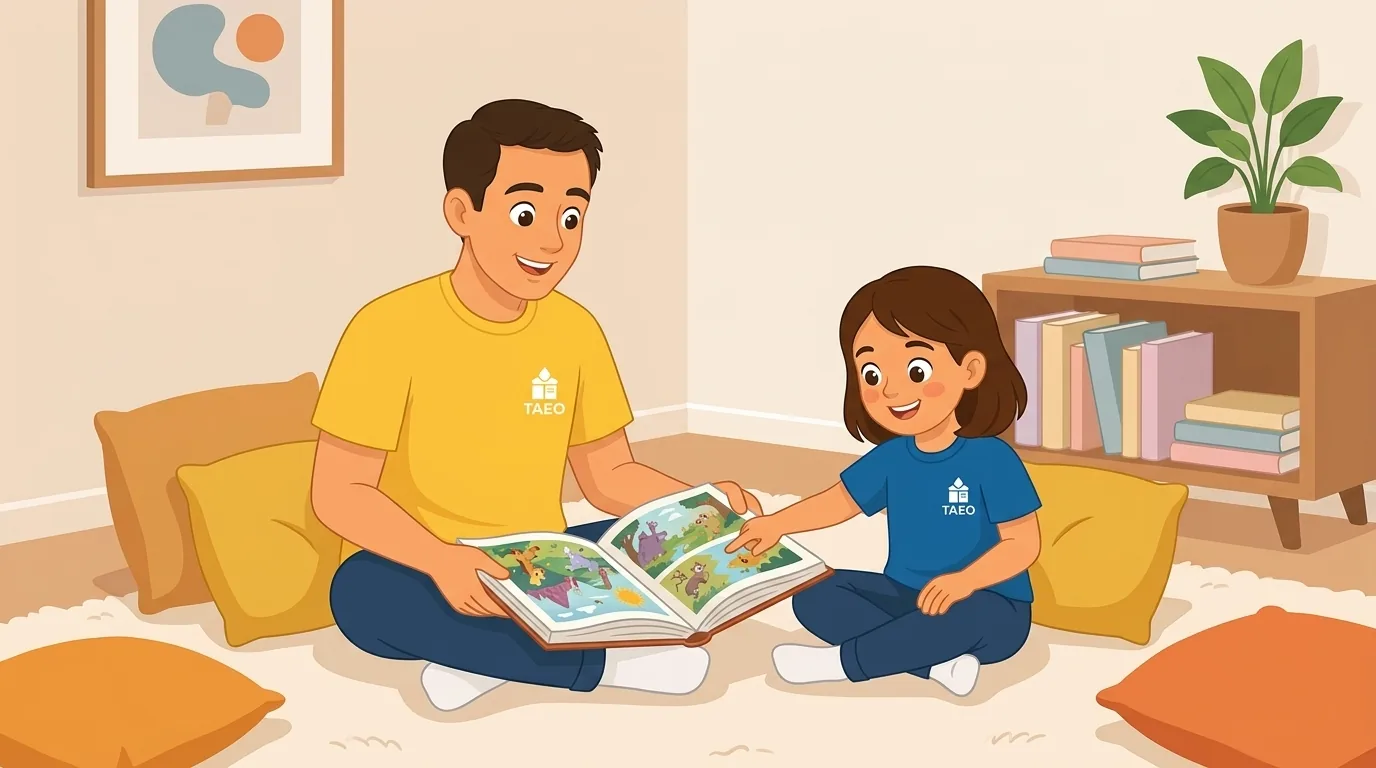
At a certain age, before children are literate, it seems that the more pictures there are, the more engaged they become. In this sense, picture books are usually at the top of the list for introducing them to the world of written expression.
Illustrations, then, are essential—not only to spark their interest, but also because children can begin to read or decode the image, practicing an interpretive reading of illustrations and forming hypotheses about the accompanying text, which provides an advantage when learning written language.
Naturally, images should preferably be colorful and imaginative, recreating real-life situations through exaggeration or playful extrapolation; they can also venture into pure fantasy, inventing things not found in the everyday world.
How Much Text
Gradually, as children grow, the amount of text will expand in the books we select for them, without diminishing the importance of imagery.
While there is no fixed standard, picture books rarely exceed 500 words in total. In contrast, The Little Prince, which can also be illustrated, reaches around 15,000 words, making it more suitable for slightly older children (ages 7 or 8 and up).
Likewise, the vocabulary will become more complex over time. Books for younger children typically feature familiar, concrete words (naming real objects and tangible elements rather than abstract concepts) along with short, simple sentences.
Tastes and Ages
Following this thread of interests and age groups, in the earliest years, children are naturally drawn to sounds, rhymes, songs, and wordplay. Later on, interest shifts toward the plot itself when it comes to storytelling.
Regarding themes, while there is not necessarily an inherent gender divide, some girls gravitate toward stories of princesses and romantic conflicts, whereas boys often lean toward adventure genres featuring pirates, science fiction, and the like. Detective stories, wizards, and fantasy tales tend to captivate everyone equally.
Science and Technology
When choosing books to foster reading, the power of non-fiction should never be underestimated, especially works with educational intent such as popular science books.
This includes books about locomotives, cars, airplanes, ancient history, mythology, cinema, and beyond. Well-illustrated and written in clear, engaging language, they are particularly appealing to children around the age of ten.
Pop-ups and Interactive Books
There are books that, in addition to words and images, invite hands-on play. These include pop-up books, fold-out poster books, and tactile formats, all of which add an extra layer of appeal.
Which books should they not read?
If a child finds written materials within reach and decides they want to read them—even if they are not yet literate and the book is not seemingly age-appropriate—we should allow them to interact with the text.
Could the book get damaged? It is possible, but that is preferable to pushing the child away from reading. If needed, we can always replace the copy, or look for a version adapted for children.
We should never tell children that books are not to be touched. Otherwise, how can we expect them to become interested in reading later on? Whether it is The Divine Comedy, Don Quixote, or the works of Shakespeare, books should welcome them: let the children come to me.
*CEO of the TAEO Psychoeducational Organization